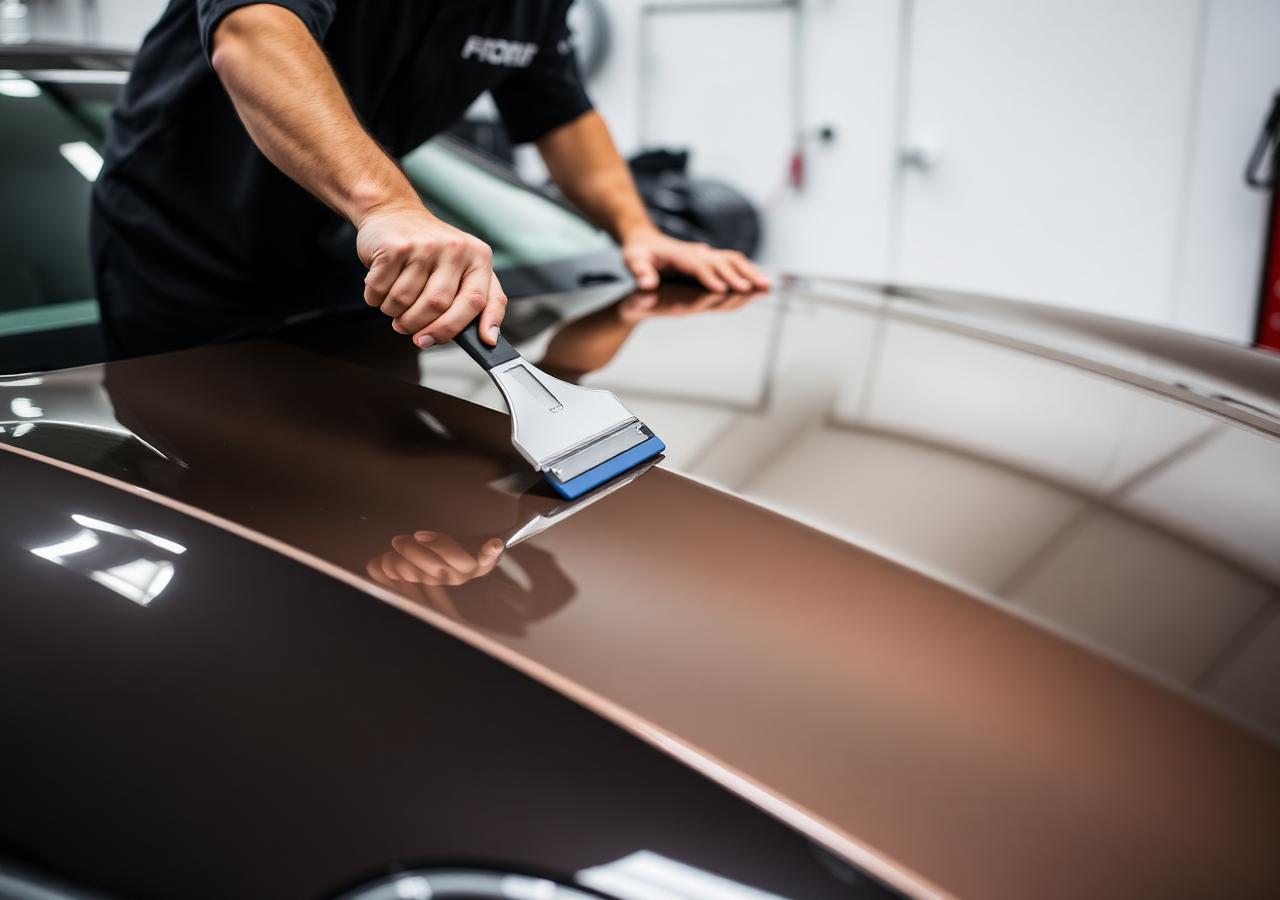
Almost every Tucson client we talk to asks the same question in the first ten minutes: do I need PPF, ceramic coating, or both? Short answer — they solve completely different problems. Here's how to figure out which one (or both) actually fits your car, your commute, and your budget.
PPF vs ceramic coating in one sentence
Paint protection film (PPF) is physical armor — a thick, self-healing urethane film that takes rock chips, scratches and bug acid so your paint doesn't. Ceramic coating is a chemical shield — a glass-like layer bonded to your clear coat that resists UV, water spots, and chemical staining, and makes everything easier to wash.
One absorbs impact. The other repels chemistry. Neither replaces the other — and in Tucson, both have very specific jobs.
Side-by-side: what each one actually does
| Threat | PPF | Ceramic coating |
|---|---|---|
| Rock chips on I-10 / I-19 | ✅ Stops them | ❌ No protection |
| Monsoon water spots | 🟡 Helps a little | ✅ Major reduction |
| Desert UV / paint fade | ✅ Blocks UV | ✅ Blocks UV |
| Bug acid, bird droppings, tree sap | ✅ Absorbs damage | 🟡 Buys you time to wash |
| Wash-induced swirls | ✅ Self-heals minor marks | 🟡 Slick surface, fewer swirls |
| Gloss / "wet look" | 🟡 Subtle boost | ✅ Significant boost |
| Lifespan in Tucson | 8–10 years | 2–7 years (by tier) |
When PPF is the right call in Tucson
Choose paint protection film as your priority if any of these match you:
- You commute on I-10, I-19 or Oracle Rd — rock chips are inevitable.
- You drive a Tesla, Porsche, BMW or any car with notoriously soft factory clear.
- You just took delivery of a new vehicle and want it to look new in 5 years.
- You plan to keep the car long term or care about resale paint condition.
- You take road trips to Phoenix, Sedona, or out toward Big Bend.
Most Tucson PPF jobs start with a partial front (bumper, partial hood, mirrors, headlights) and scale up to a full front clip or full vehicle from there. We cut every piece on a plotter — no razor blades on your paint.
When ceramic coating is the right call
Choose a ceramic coating first if you mostly care about:
- Fighting monsoon water spots and hard-water etching.
- Stopping UV oxidation and chalky paint after years in the desert sun.
- Easier washes — dust, bugs and bird droppings rinse off instead of sticking.
- A noticeably deeper, glossier look on every panel, not just the front.
- Protecting a leased or shorter-term vehicle without the bigger PPF investment.
Our monsoon survival guide goes deeper on exactly how ceramic coatings hold up between June and September here.
The combo most Tucson clients actually pick
The honest answer for most enthusiast and Tesla clients is PPF on the front clip + ceramic coating on everything. The film takes the impacts where they happen (the front), and the coating handles UV, water spots and cleanability across every panel — including on top of the PPF itself.
Ceramic over PPF is the gold standard: it keeps the film slick, easier to wash, and dramatically slows the yellowing you'd otherwise see by year 6 or 7 in the Sonoran sun.
What does it cost in Tucson?
Every quote is in-person because paint condition and vehicle size move the number a lot, but here's a realistic ballpark:
| Package | Typical range |
|---|---|
| Ceramic coating (entry → graphene) | $999 – $2,500+ |
| Partial front PPF | $1,500 – $2,500 |
| Full front PPF | $2,500 – $4,000 |
| Full-vehicle PPF | $6,000 – $9,000+ |
Local context: Tesla, foothills, freeway commuters
Tesla owners are the #1 PPF clients we see — the factory clear is soft, the white and black paints scratch easily, and resale stays much higher with film on the front. Catalina Foothills and Oro Valley drivers usually deal with more mountain dust and longer sun exposure — ceramic is almost non-negotiable there. Daily commuters on I-10 from Marana are the ones who feel the rock-chip pain the fastest.
If you're still unsure, the easiest move is to bring the car by our Grant Rd studio for a free walk-around. We'll point at the actual panels that need film, the ones that just need a coating, and what we'd skip.
FAQ
What's the actual difference between PPF and ceramic coating?
+
PPF (paint protection film) is a thick, self-healing urethane film that physically absorbs rock chips, scratches and minor impacts. Ceramic coating is a thin chemical layer that bonds to the clear coat and adds gloss, UV resistance, and hydrophobic water-shedding. PPF is physical armor; ceramic is a chemical shield.
If I can only afford one in Tucson, which should I get?
+
For most Tucson daily drivers we recommend a ceramic coating first — it protects every panel from monsoon water spots and the 110° UV that breaks down clear coat. PPF becomes the priority if you commute on I-10, drive a Tesla or other car with soft factory clear, or just got a new vehicle you want to keep chip-free.
Can you put ceramic coating on top of PPF?
+
Yes — and we recommend it. A ceramic coating over PPF makes the film easier to clean, keeps bugs and tar from staining it, and dramatically slows yellowing from UV. This combo is the gold standard for Tucson Teslas and any car kept long-term.
How much does PPF cost compared to ceramic coating in Tucson?
+
Ballpark: a partial front PPF (bumper, partial hood, mirrors) runs roughly $1,500–$2,500. A full front clip is $2,500–$4,000. Full-vehicle PPF is $6,000–$9,000+. Ceramic coating packages range from about $999 for entry coatings up to $2,500+ for multi-year graphene. Pricing varies by vehicle size and paint condition — we always quote in person.
How long does PPF last in Arizona's sun?
+
Quality PPF (XPEL, STEK) carries a 10-year warranty against yellowing, cracking and peeling — and in Tucson we typically see 8–10 years of real-world life when the film is washed regularly. Top-coating it with ceramic stretches that lifespan and keeps it looking new.
More from the journal
How Ceramic Coating Survives a Tucson Monsoon Season
Monsoon storms hammer Tucson paint with dust, hard water, and hail — then the sun bakes the residue on. Here's how a ceramic coating actually fights back.
ReadThe Ultimate Guide to Ceramic Coating in Tucson: Costs, Maintenance, and Value
What ceramic coating really costs in Tucson, what's included at each price point, and the exact maintenance routine that keeps it beading through monsoon season.
Read